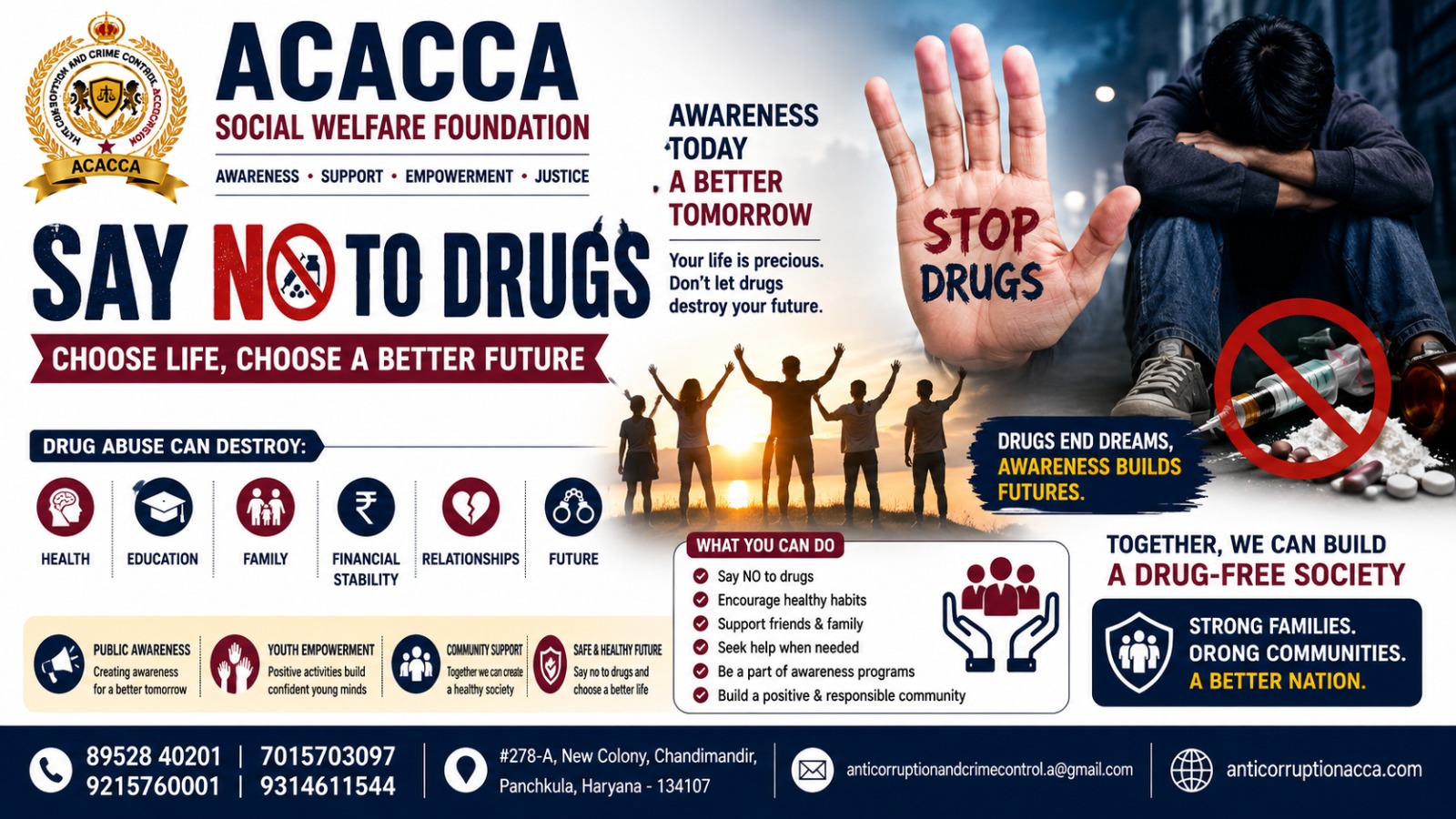
Drug abuse is a serious social issue that can affect individuals, families, and communities. The consequences can extend beyond physical health and may also affect education, employment, relationships, financial stability, and the overall wellbeing of a family.
Preventing drug abuse requires more than reacting after a problem has developed. Awareness, education, family support, responsible communities, and timely assistance can all play an important role in prevention.
ACACCA Social Welfare Foundation includes anti-drug awareness among its social welfare objectives and supports efforts to create greater awareness about the harmful effects of drug abuse and the importance of responsible choices.
Why Anti-Drug Awareness Is Important
People may make harmful decisions when they do not understand the risks associated with substance abuse or when they are influenced by their surroundings.
Awareness can help individuals understand that drug abuse can have serious consequences and encourage them to seek appropriate help when they or someone they know is struggling.
A community that talks openly and responsibly about the risks of drug abuse can create an environment where prevention becomes easier.
How Drug Abuse Can Affect Families
Substance abuse does not affect only the person using drugs. It can also create difficulties for parents, children, spouses, siblings, and other family members.
Families may experience:
- Emotional stress
- Financial difficulties
- Relationship problems
- Reduced educational or work performance
- Social isolation
- Safety concerns
- Long-term uncertainty
Early awareness can help families recognize that drug-related problems require responsible attention and appropriate professional or community support.
Young People and the Importance of Prevention
Young people can be particularly influenced by friends, social environments, curiosity, and misinformation.
Education about the risks of substance abuse can help children and young adults make more informed decisions.
Parents, teachers, community leaders, and social organizations can all contribute by encouraging open communication and teaching young people how to respond to negative pressure.
Prevention should focus on building confidence, healthy decision-making, and positive opportunities rather than simply creating fear.
The Role of Parents and Families
Families can play an important role in prevention.
Parents and guardians can encourage healthy communication, pay attention to significant changes in behavior, discuss the risks of substance abuse, and create an environment where young people feel comfortable asking for help.
It is important to approach concerns with care rather than immediately relying on blame or punishment.
When a serious problem is suspected, families should seek help from qualified healthcare, counselling, addiction-support, or other appropriate professional services.
Education Can Make a Difference
Awareness programs can provide young people and communities with reliable information about the risks associated with drug abuse.
Educational initiatives can discuss:
- Health and social consequences
- The dangers of substance dependence
- Peer pressure and decision-making
- Healthy ways to deal with stress
- How to seek appropriate help
- The importance of supporting affected individuals responsibly
Accurate information can help counter myths and misinformation surrounding drugs.
Creating a Supportive Community
Prevention becomes stronger when communities work together.
Schools, families, social organizations, authorities, healthcare professionals, and responsible citizens can contribute in different ways.
Community awareness programs can encourage people to understand the risks of drug abuse while promoting healthier lifestyles and positive social activities.
ACACCA Social Welfare Foundation works toward public awareness as part of its broader social welfare objectives.
Anti-Drug Awareness and Education
Education is one of the strongest tools available for prevention.
Students should have access to age-appropriate information that helps them understand the consequences of substance abuse and the importance of making responsible choices.
Schools and families can also encourage positive activities such as sports, creative interests, education, volunteering, and community participation.
Giving young people constructive opportunities can help them develop confidence and a stronger sense of purpose.
Recognizing When Someone May Need Help
Drug-related problems can sometimes develop gradually. Changes in behavior, education, work, relationships, or daily routines may become noticeable over time.
However, these signs can have many possible causes, so people should avoid making assumptions or diagnosing someone themselves.
If there is a genuine concern, speaking with a qualified healthcare or addiction professional is a better approach.
Support should focus on safety, professional guidance, and recovery rather than stigma.
Reducing the Stigma Around Seeking Help
People dealing with substance-related problems may hesitate to seek assistance because of fear of judgment.
Stigma can make it harder for individuals and families to ask for help.
A responsible society should encourage people to seek appropriate professional support and treat addiction-related problems as issues that deserve serious, compassionate attention.
Awareness can help replace misinformation and stigma with understanding and responsible action.
The Role of NGOs in Anti-Drug Awareness
Social welfare organizations can contribute to prevention by spreading awareness and encouraging community participation.
Their work may include:
- Organizing public awareness programs.
- Educating communities about the risks of drug abuse.
- Encouraging healthy and responsible lifestyles.
- Supporting families through awareness initiatives.
- Working with appropriate authorities and professionals.
- Encouraging young people to participate in positive activities.
ACACCA Social Welfare Foundation includes support for anti-drug awareness among its social welfare activities.
Anti-Drug Awareness and Crime Prevention
Drug abuse and crime can sometimes be connected to broader social problems, making prevention and awareness important parts of community safety.
Creating awareness about drug-related risks can contribute to broader anti-crime efforts by encouraging responsible behavior and cooperation with appropriate authorities.
Citizens should report serious concerns through the proper legal and administrative channels rather than taking matters into their own hands.
What Citizens Can Do
Every individual can contribute to a healthier community.
Citizens can:
- Talk openly and responsibly about the risks of drug abuse.
- Encourage young people to make healthy choices.
- Avoid spreading misinformation.
- Support people in seeking professional help.
- Participate in awareness programs.
- Encourage positive activities for children and young adults.
- Cooperate with appropriate authorities when necessary.
- Avoid stigmatizing people who are seeking recovery.
Small community efforts can become meaningful when people participate consistently.
Building a Healthier Future
A healthier society requires investment in young people, education, awareness, family support, and community development.
Anti-drug awareness should therefore be part of a broader social welfare approach that also includes education, healthcare, employment opportunities, mental wellbeing, safety, and responsible citizenship.
ACACCA Social Welfare Foundation works across several areas of social welfare, including child education, women safety awareness, legal assistance for poor people, environmental protection, animal welfare, traffic awareness, medical support for elderly people, and assistance for needy communities.
Conclusion
Drug abuse is a complex social issue, but prevention begins with awareness.
When young people have access to reliable information, families communicate openly, communities support healthy choices, and people know where to seek appropriate professional help, the foundation for prevention becomes stronger.
ACACCA Social Welfare Foundation works toward creating awareness about the harmful effects of drug abuse as part of its wider commitment to social welfare and community development.
A safer and healthier society begins with informed choices, supportive communities, and responsible action.
Spread awareness. Support prevention. Build a healthier future.
Contact ACACCA Social Welfare Foundation
Registered Office:
#278-A, New Colony, Chandimandir, Panchkula, Haryana – 134107
Website: anticorruptionacca.com
Email: anticorruptionandcrimecontrol.a@gmail.com
Contact Numbers:
89528 40201 | 7015703097 | 9215760001 | 9314611544