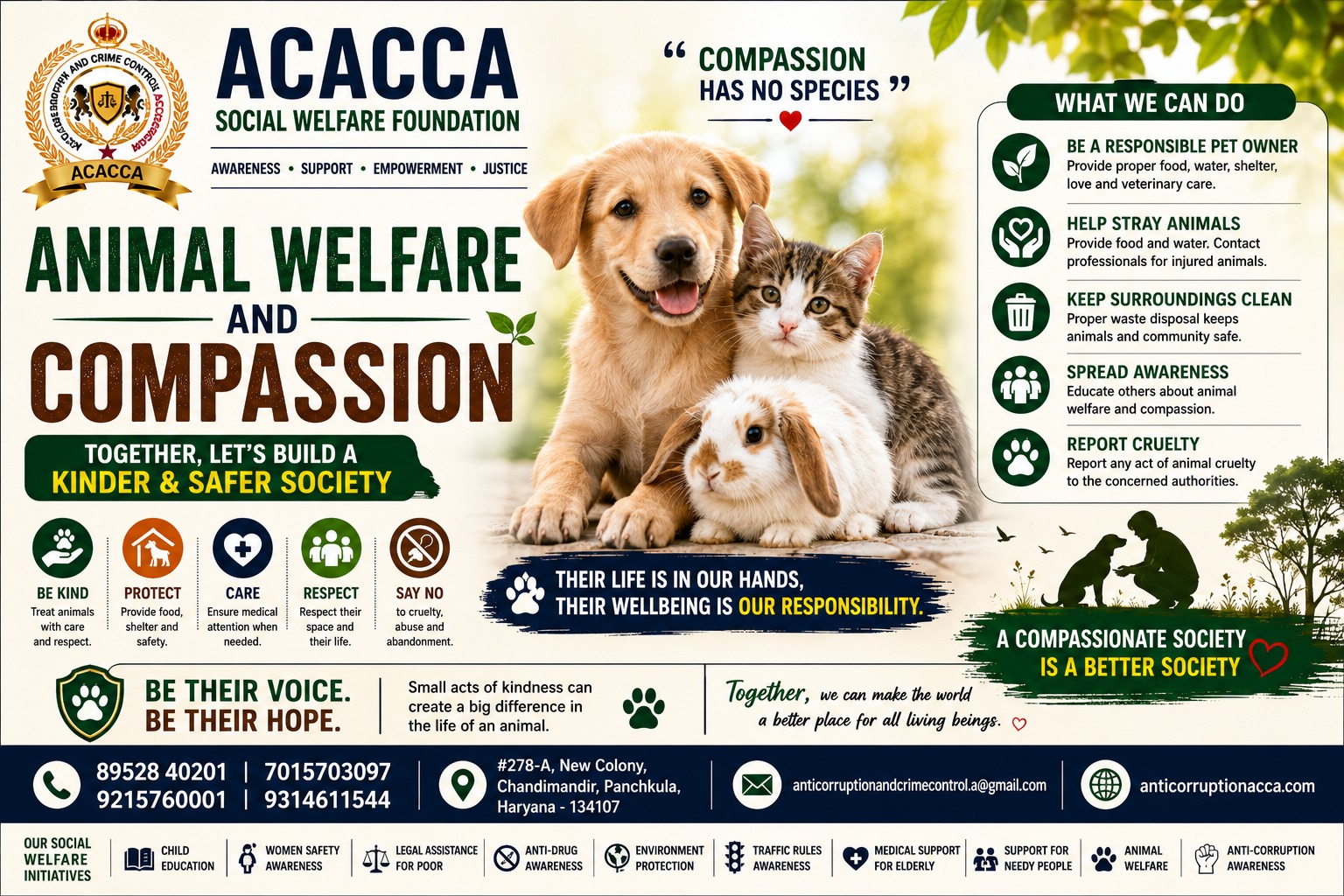
A compassionate society is one that cares not only for people but also for animals and the environment around them. Animals are an important part of our ecosystem and communities, yet they can often become victims of neglect, abandonment, cruelty, and unsafe living conditions.
Protecting animals is therefore not only an act of kindness. It is also an important part of building a responsible and compassionate society.
ACACCA Social Welfare Foundation includes animal welfare and preventing cruelty toward animals among its social welfare objectives. Through awareness and community participation, such initiatives can encourage people to treat animals with care, responsibility, and compassion.
Why Animal Welfare Matters
Animals depend on people and their surroundings in many ways. Domestic animals, stray animals, and wildlife can all face different challenges.
Animal welfare is important because responsible treatment can help reduce unnecessary suffering and encourage communities to coexist more peacefully with animals.
A society that respects animals can also encourage values such as:
- Compassion
- Responsibility
- Kindness
- Respect for life
- Community awareness
- Responsible citizenship
These values can influence how people treat not only animals but also other members of society.
Understanding Animal Cruelty
Animal cruelty can take different forms. It may include intentional physical harm, neglect, abandonment, withholding basic care, or other irresponsible treatment.
People may sometimes overlook animal suffering because they are unaware of what responsible animal care involves.
Public awareness can help communities understand that animals need appropriate food, water, shelter, medical attention when required, and protection from unnecessary harm.
The Importance of Responsible Pet Ownership
Owning an animal is a responsibility, not simply a choice.
Pet owners should understand the basic needs of their animals and make reasonable arrangements for their care.
Responsible pet ownership includes:
- Providing suitable food and clean water
- Maintaining a safe living environment
- Arranging appropriate veterinary care
- Keeping animals protected from avoidable dangers
- Following applicable local rules
- Preventing abandonment
- Treating animals with patience and care
Before bringing an animal home, families should consider whether they have the time, resources, and commitment required for responsible care.
Caring for Stray Animals
Stray animals can face challenges such as lack of food, injuries, disease, extreme weather, traffic, and unsafe surroundings.
Community members can contribute in responsible ways by providing basic assistance where practical, contacting appropriate animal welfare or veterinary services when an animal is injured, and avoiding actions that may put either people or animals at risk.
People should also follow local regulations and seek professional assistance for serious animal-related situations.
Children and Animal Compassion
Teaching children to treat animals with kindness can help develop empathy and responsibility from an early age.
Parents and teachers can encourage children to:
- Avoid hurting animals
- Respect animals’ space
- Avoid disturbing nests or habitats
- Ask an adult for help when they find an injured animal
- Understand that animals can feel fear and pain
- Treat pets responsibly
Early lessons about compassion can become lifelong values.
Animal Welfare and Environmental Protection
Animal welfare and environmental protection are closely connected.
Animals depend on healthy ecosystems, clean surroundings, and suitable habitats. Pollution, habitat destruction, irresponsible waste disposal, and environmental damage can affect animals directly or indirectly.
Protecting nature therefore also contributes to protecting wildlife and other animals.
ACACCA Social Welfare Foundation includes both animal welfare and environmental protection among its social welfare objectives.
The Role of Community Awareness
Animal welfare cannot be addressed by one person or organization alone.
Communities can contribute by spreading awareness about responsible animal treatment and encouraging people to report serious cases of cruelty through appropriate channels.
Awareness can also help people understand how to safely respond when they encounter injured, abandoned, or distressed animals.
How NGOs Can Support Animal Welfare
Social welfare organizations can play a useful role in creating awareness and encouraging community participation.
Their efforts may include:
- Organizing animal welfare awareness programs.
- Educating communities about responsible treatment of animals.
- Encouraging compassion toward stray animals.
- Promoting responsible pet ownership.
- Supporting environmental awareness.
- Encouraging people to seek appropriate veterinary or animal welfare assistance.
- Working with relevant authorities and organizations when required.
The exact form of assistance depends on local needs, available resources, and applicable rules.
Why Awareness Is Better Than Indifference
Many cases of animal suffering can become worse when people simply ignore them.
Awareness encourages people to notice problems and respond responsibly.
For example, if someone finds an injured animal, the safest approach may be to contact a veterinarian, animal welfare organization, or relevant local authority rather than attempting potentially dangerous treatment themselves.
Responsible action protects both the animal and the person trying to help.
Creating Safer Communities for Animals and People
A community that treats animals responsibly can also become more aware of its surroundings.
Clean public spaces, responsible waste disposal, safer roads, environmental protection, and compassionate treatment of animals all contribute to better community living.
Animal welfare is therefore part of a broader approach to social responsibility.
What Citizens Can Do
Everyone can take simple steps to support animal welfare.
Citizens can:
- Treat animals with kindness.
- Never intentionally harm animals.
- Avoid abandoning pets.
- Provide basic assistance when it is safe and practical.
- Contact appropriate professionals when an animal is injured or seriously unwell.
- Keep surroundings free from harmful waste.
- Teach children to respect animals.
- Support responsible animal welfare initiatives.
- Protect natural habitats and the environment.
Small actions can have a meaningful impact when practiced consistently.
ACACCA Social Welfare Foundation’s Commitment
Animal welfare is one part of ACACCA Social Welfare Foundation’s broader social welfare mission.
The foundation also works across areas including:
- Child education
- Women safety awareness
- Legal assistance for poor people
- Anti-drug awareness
- Environmental protection
- Traffic rules awareness
- Medical support for elderly people
- Assistance for poor and needy people
- Public awareness programs
- Emergency assistance
- Anti-corruption awareness
These initiatives reflect the broader goal of encouraging awareness, responsibility, compassion, and community participation.
Building a Compassionate Society
Social progress is not measured only by economic development or infrastructure. It can also be seen in how communities treat vulnerable people, protect the environment, and care for animals.
When people choose compassion over cruelty and responsibility over neglect, they contribute to a healthier community.
Animal welfare can therefore become a meaningful part of creating a more humane and responsible society.
Conclusion
Animals cannot speak for themselves in the same way people can. Their wellbeing often depends on the choices and actions of the people around them.
By promoting responsible pet ownership, protecting stray animals, preventing cruelty, supporting environmental protection, and spreading awareness, communities can make a positive difference.
ACACCA Social Welfare Foundation aims to contribute to this effort through animal welfare awareness and its wider social welfare activities.
Kindness towards animals is a reflection of compassion within society.
Together, we can work toward a community where people, animals, and the environment are treated with greater care and respect.
Contact ACACCA Social Welfare Foundation
Registered Office:
#278-A, New Colony, Chandimandir, Panchkula, Haryana – 134107
Website: anticorruptionacca.com
Email: anticorruptionandcrimecontrol.a@gmail.com
Contact Numbers:
89528 40201 | 7015703097 | 9215760001 | 9314611544